Book of Tree Photographs, published June 2017

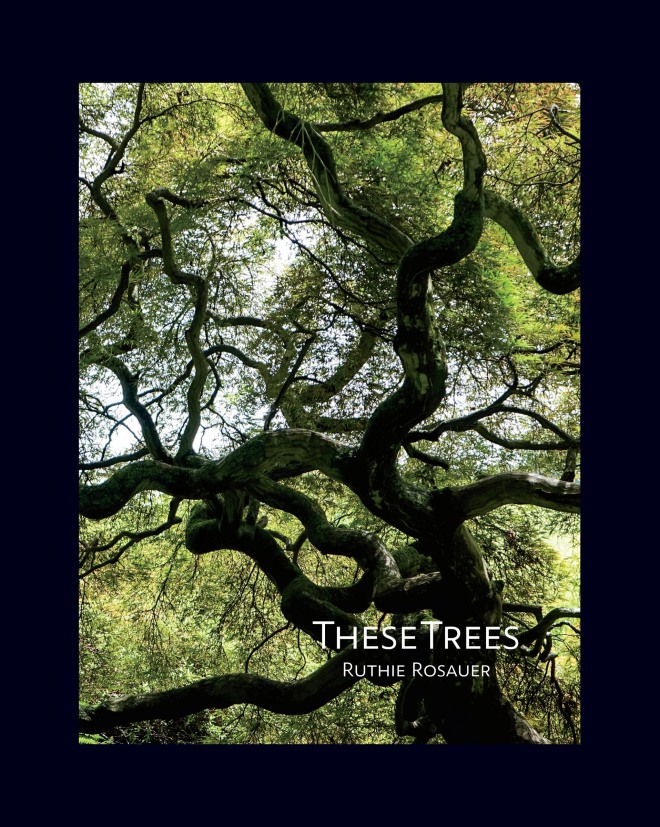
Photographer, Ruthie Rosauer, has created a book of tree photographs entitled, “These Trees.” As the title suggests, it is a collection of 140 photographs detailing trees as many have never seen them before: whole trees, groups of trees, close-ups of bark, leaves, roots, and interesting shapes formed by tree branches, within the bark, or from twisted trunks. Nuts, flowers and fruits form the “Crowning Glories” section. This book is a veritable ‘valentine’ to the arboreal world.

1 These Trees_Cover

The book is organized into six chapters: Bark, Leaves, Shapes, Roots, CrowningGlories and Whole Trees. It is in part contemplative, part whimsical, but alwaysa celebration of the tree in its natural setting. To keep you company on yourvirtual walk through these trees are 25 companion poems penned by 20 poets;six of these poets live in North Carolina. One of the poets is Carol Pearce Bjorlie who penned four of the poems in the book.

You can learn much more about the book on the website: RuthieRosePhotography.com

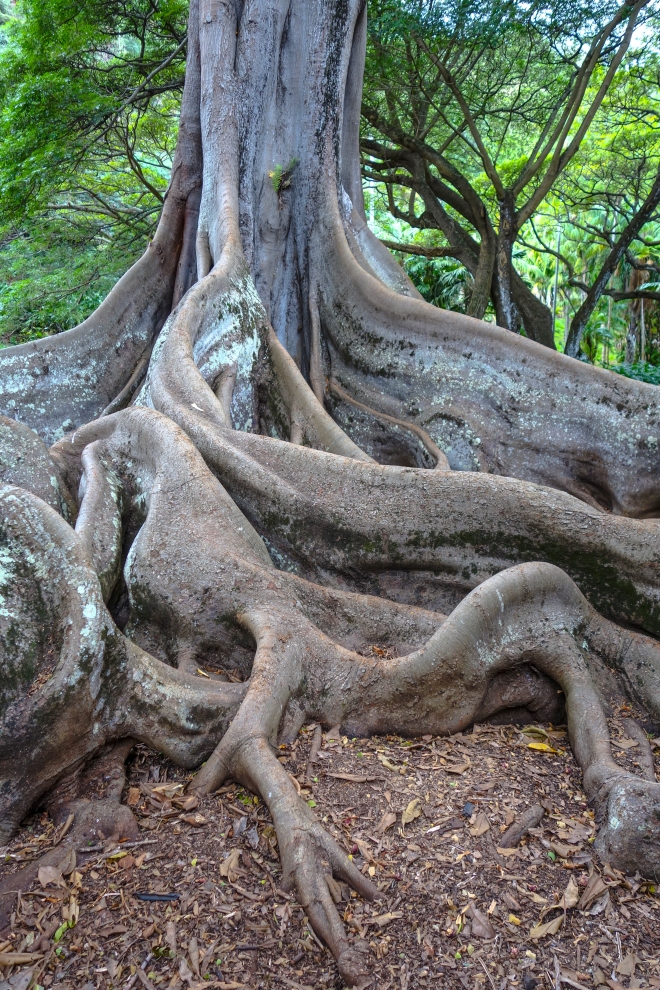
Pictured below is a Moreton Bay Fig tree taken at Allerton Garden in Kauai.

Moreton Bay roots good

September Artist of the Month for Grateful Steps Bookstore in Asheville

 Flowers, Barks and Leaves: An Homage to Mother Nature

Ruthie Rosauer is in love with trees. She loves the lines created by trunk and branch, the lush textures of bark and leaf. Although she has taken snapshots for most of her life, it was her passion for trees that drew her to a more serious pursuit of photography. A pursuit that has since branched out to include flowers, landscapes, streams and rocks. Ruthie has harvested the best of her portfolio for this exhibit.

Ruthie’s photographs have been on display at the Blue Ridge Community College for the August 2014 “Bring Us Your Best” juried art show sponsored by the Arts Council of Henderson County, and are currently on display at the Tryon Painters and Sculptors Exhibit through mid-September at 26 Maple St. in Tryon, NC.

Grateful Steps Bookstore is located at 159 South Lexington Avenue, Asheville, NC 28801 (phone 828-277-0998)

There will be an artist reception open to the public on Saturday, September 6, 2014 from 2 – 3 pm. Refreshments will be served and Ruthie will be on hand. Photos below are from her series: “All Bark, No Bite.”


bark 3 Longwood Apr09


IMG_6801 DSCN2557

Ruthie Rosauer’s photography in Bring Us Your Best show

Ruthie Rosauer, the photographer for Poemscapes, has had her work accepted into Henderson County’s Arts Council juried art show “Bring Us Your Best.” The show opens Friday evening, August 8 and continues through Friday, August 29 (open each day from 10am – 4pm). The exhibit, housed at the Blue Ridge Community College Conference Hall (in the Education, Development and Technology Building) is free and open to the public.

Pink tulip

Pink tulip

PEANUTBUTTER and POEMSCAPES August 1, 2014

On Friday evening, August 1, at 7pm there will be a PEANUTBUTTER and POEMSCAPES 

fundraiser at the Calvary Episcopal Church, 2840 Hendersonville Rd., Fletcher, NC. 

Price of admission is one jar of peanutbutter, which will be donated to the church’s food pantry. 

Carol Pearce Bjorlie, poet and cellist, will read her poems. Carol and her husband, Leo

Bjorlie, will play duets on cello and double bass. Photo collages combining Carol’s poetry

and photos by Ruthie Rosauer will be on display. ImageC

Ruthie’s Photos on Display June 14

If you have seen Ruthie’s photography on display and wondered where you could purchase it — you need wonder no more. On Saturday, June 14, her work will be on display in the yard of the Art Mob in Hendersonville at 124 – 4th Ave. from 9am – 3pm. It will include poemscape collages and individual photographs.DSCN2376

Carol’s Musings about nature and silence


I write because I love the world. I am now learning to love a new world.
Instead of Minnesota’s sky-reflecting lakes, golden prairie, and the Mississippi’s locks and dams, I am living in the Blue Ridge mountains of Asheville, North Carolina,near the French Broad River’s shoal-shallow banks. I was born in Richmond, Virginia. My poems sound the way I talk, with words like “veranda, magnolia,” that made me listen to myself when I said them in St. Paul, coming out as naturally here as shrimp and grits for dinner.
My spiritual world began on a creek bank where my father fished in a tributary off the James River. He sat still as a monk, his fishing rod at attention. The line pierced the surface of the water. The worm lurked in the cool shallows. This is where the big bass fed. I learned to be quiet here. I was happy to sit near him, playing with the tin can of worms. Fifty years after his death, I consider the silence, sanctuary, and stillness of those woods and know these conditions are essential in my writing life.
In silence, solitude and stillness, I sat beside Lake Kabekona in the North Woods of Minnesota, notebook on my knee, pen in hand. Stillness invites intimacy with nature. I glanced at my pen, and there perched a red-winged dragonfly observing me. We stared each other down – my great bulk and his/her fragile being in communion.
I call this a “Mary Oliver moment.” Mary knows how to be still, knows how to invite communication with grasshoppers and fawns, knows how to: Pay Attention/ Be astonished/ Tell about it, as she writes in a section of her poem, SOMETIMES, ”Instructions for living a life.”
Kentucky poet, Wendell Berry, loves the world also. His love is tempered with angst for the future. Like Mary Oliver, he is full of instructions. This is the second verse of “How To Be A Poet,” from Given New Poems.

Breathe with unconditional breath
the unconditioned air.
Shun electric wire.
Communicate slowly. Live
a three-dimensional life;
stay away from screens.
Stay away from anything
that obscures the place it is in.
There are no un-sacred places;
There are only sacred places
And desecrated places.

In his masterful Manifesto: The Mad Farmer’s Liberation Front, from, The Country of Marriage, he reminds us of our greed and lays out a plan of protection for ourselves, and our planet:

So, friends, every day do something/that won’t compute.
Denounce the government and embrace the flag.
Ask questions that have no answers.
Invest in the millenium.
Plant sequoias.
Practice resurrection.

From my long-looking, silence, stillness and sanctuary in nature, I harvest my love of the world on white pages scattered with words in purple, green, or blue ink, sometimes a good dark pencil. The muse lights on my pen, and I am astonished, and tell about it again, and again. As Samuel Beckett wrote, “Words are all we have.”

Poemscapes at Hendersonville Library April 11, 2014

Many thanks to all of you who attended Poemscapes at the Hendersonville Library on April 11, 2014. And a big thank you for Sarah Hudson, library liaison, who helped us set up the exhibit. It was our very first opportunity to project photos onto a large screen for the audience. There were also some photographs matted and framed for viewing, but I think the projection onto the screen really made this event special. Well, that and Carol’s offerings on the cello: Summertime, Ashokan Farewell, Eccles’ Sonata and, of course, a Bach cello suite!

Ruthie (on left) and Carol (with cello) at Hendersonville Library April 2014.

Ruthie (on left) and Carol (with cello) at Hendersonville Library April 2014.

Gifts from the Muse

By Carol Pearce Bjorlie
Ruthie Rosauer and I have been in cahoots with one another since October, 2013.
Ruthie’s photos are poems without words. My muse kicked in when I saw them, and I began to write. Ruthie found poems of mine, some ten years old, which spoke to the scenes she had frozen in time.
I can’t not write.
Ruthie can’t not click.
Poemscapes, the framed collages, cards, and videos are the result of a synergy between two members of a creative team.
What Ruthie and I have in common: We stop. We look. We listen. (We have husbands from Minnesota.)
In Annie Dillard’s essay on Seeing, from Pilgrim at Tinker Creek, she writes,
“It is all a matter of keeping my eyes open. The appearances of nature are free gifts.”
For the poet in me, the one with pen in hand at art galleries, gardens, and concerts, this statement makes complete sense, “Unless I call my attention to what passes before my eyes, I simply won’t see it.”
Consider a photographer’s stillness. Ann Lamott calls this, “Present and in awe.” She adds, “There is ecstacy in paying attention.”
The word “attentive” comes from a French verb which means to stretch. Stretching is hard work. It requires time, stillness, silence, and solitude.
In Bill Moyer’s anthology, The Language of Life: A Festival of Poets, W. S. Merwin says it all. “Any work of art makes one simple demand, and that is to stop. You’ve got to stop what you’re doing, what you’re thinking and what you’re expecting, and just be there for the poem (or landscape) for however long it takes.”
Ruthie waits for light. Carol watches clouds, both reverent in the presence of the world.